

Google is no longer the only place where your customers look for answers.
ChatGPT handles over two billion queries a day. Perplexity, Gemini, Copilot, Claude — these platforms do not show ten blue links. They give one answer. Maybe two. And if your business is not part of that answer, you are invisible to a rapidly growing number of potential customers.
This is not a prediction. It is happening right now.
Gartner estimates that by the end of 2026, a quarter of all traditional search traffic will have moved to AI chatbots and virtual assistants. That is not a small shift. That is a structural change in how people find products, services, and expertise.
I. From Rankings to Citations
Traditional search engine optimization was built to compete for position on a results page. The premise was simple: rank higher, get more clicks, convert more visitors. For two decades, that model held. It still works — but it is no longer the only model that matters.
Answer Engine Optimization (AEO) is the practice of structuring content so that AI platforms can find it, understand it, trust it, and cite it when generating a response. The goal is no longer just ranking. The goal is being the source that an AI system references when someone asks a question in your field.
The distinction matters because the mechanics are different. A traditional search engine indexes your page and places it in a ranked list. An answer engine reads your page, evaluates whether it contains a clear and trustworthy answer, and either cites it directly in a synthesized response or ignores it entirely. There is no second page. There is no scrolling past your competitor to find you. You are either part of the answer, or you do not exist in that interaction.
SEO and AEO are not competing strategies. Both reward well-structured, authoritative content. But AEO adds an additional requirement: every section of your content must be independently understandable and independently citable. A page that buries its best information three scrolls down may rank fine in Google. It will not get cited by ChatGPT.

II. What AI Platforms Actually Look For
Every answer engine works slightly differently, but the pattern across platforms is consistent. The process follows three stages.
Query interpretation. The system parses the user's question by intent and meaning, not by keyword matching. A query about "how to pick a technology partner for my manufacturing company" activates a semantic search, not a keyword scan. The AI identifies the concepts, entities, and relationships in the question before it looks for sources.
Retrieval. The system searches for content that is semantically relevant. A page about "IT consulting for European SMEs" can surface for that manufacturing query even without matching the exact words, as long as the concepts align. This is fundamentally different from traditional keyword-based indexing.
Ranking and selection. Retrieved documents are scored on relevance, authority, recency, and structural quality. Pages that lead with a clear answer and support it with evidence get selected more often. Pages that are vague, outdated, or structurally disorganized get passed over — regardless of how many backlinks they have.
Different platforms weight these signals differently. Perplexity prioritizes recency. Google AI Overviews respond strongly to schema markup and structured headings. ChatGPT favors depth and comprehensiveness. Gemini leans on Google's existing authority signals and its Knowledge Graph. Optimizing for "AI search" as a single category misses the point. The platforms are distinct, and the content that earns citations in one may be invisible in another.
III. Why This Matters More for Small Businesses Than Large Ones
A Fortune 500 company will eventually hire an agency to handle this. They have the budget. They will catch up.
But for small and mid-size businesses, the current window is interesting. Research indicates that 60% of sources cited by AI platforms are not even in Google's top 10 results. That single finding should change how smaller businesses think about digital visibility.
In traditional search, competing against larger companies with massive domain authority and years of accumulated backlinks was a structural disadvantage. In AI citation, the playing field is weighted differently. Recency matters. Specificity matters. Having a clear, direct answer to a real question that your customers actually ask matters more than domain authority or backlink count.
A well-structured blog post from a 10-person consultancy can get cited by ChatGPT over a poorly structured page from a company with 10,000 employees. That is not a theoretical possibility. It is a documented pattern.
The practical implication: businesses that invest in AEO now, while most of their competitors are still thinking exclusively about traditional SEO, have a disproportionate opportunity to establish citation authority in their categories.
IV. Practical Steps You Can Take Today
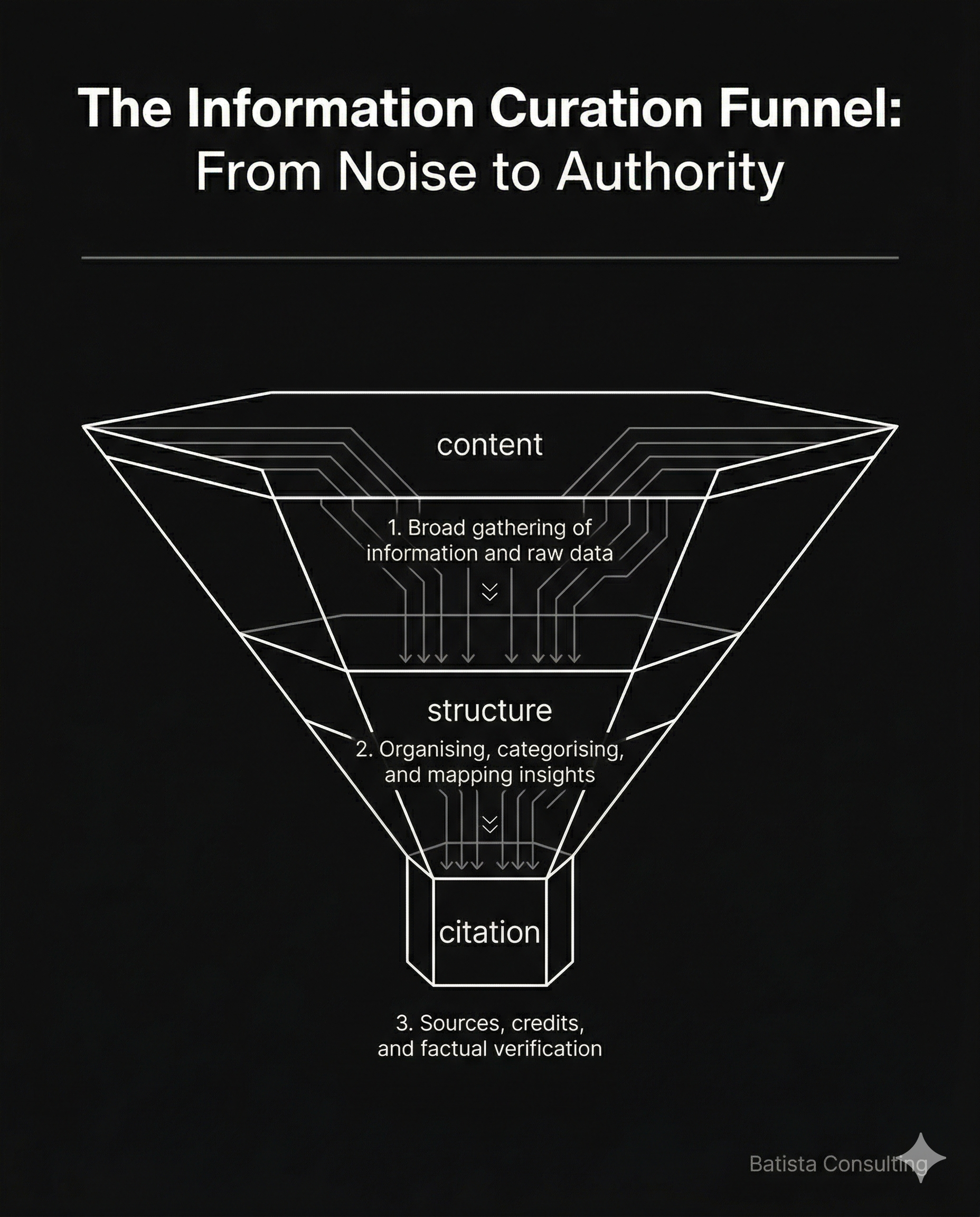
AEO does not require a complete website rebuild or a specialized agency. A few targeted adjustments to existing content can make a measurable difference.
Answer real questions directly. Think about what your customers ask you in meetings, emails, or calls. Write those questions as headings on your website and answer them in the first paragraph below the heading. Do not make the reader scroll for the answer. AI systems extract from the first clear response they find.
Structure content for extraction. Use clear heading hierarchies. Break information into distinct sections. Each section should be independently understandable — if a paragraph cannot stand on its own, it is harder for an AI to cite it. This is information architecture, not SEO trickery.
Keep content current. AI platforms weight recency in their citation decisions. A guide written in 2022 about a 2026 topic is a liability, not an asset. Update your important pages at least quarterly. Add current data. Remove outdated references. Visible freshness signals — publication dates, update notes — reinforce credibility to both humans and machines.
Implement structured data. Schema markup (FAQ, HowTo, Organization, Article) helps AI systems understand what your page is about, who wrote it, and what category of knowledge it represents. If you are on WordPress, plugins handle this without code. If your site uses a custom stack, the implementation is straightforward for any developer.
Build presence beyond your own domain. AI models cross-reference multiple sources before deciding what to trust. If your name appears only on your own website, that is a weaker signal than if it appears in industry publications, professional directories, and third-party platforms. The entity signal — how broadly and consistently your brand appears across the web — matters more in AEO than raw backlink counts.

V. Measuring What Matters
AEO changes what success looks like. Traditional SEO metrics — keyword rankings, organic traffic, click-through rates — remain relevant but are no longer sufficient.
The metrics that matter in AEO are different: citation frequency across AI platforms, branded search volume growth, referral traffic from AI-powered tools, and the indirect conversions that come from someone hearing your name in a ChatGPT response and searching for you directly afterward.
Tracking this is not yet as mature as traditional SEO analytics. Specialized tools exist — and more are appearing — but the simplest starting point is manual: periodically test queries relevant to your business in ChatGPT, Perplexity, Gemini, and Google AI Overviews. Note whether your content appears. Note which competitors appear. That information alone is more actionable than most dashboards.
VI. The Conservative Case for Acting Now
The shift from search results to AI-generated answers is not a trend. It is a structural change in how information reaches decision-makers. The businesses that structure their content for AI citation today will be the ones that get recommended when it matters — when a potential customer asks an AI assistant for a solution in your category.
This does not require chasing the latest platform or rebuilding your digital presence from scratch. It requires the same qualities that make content genuinely useful to humans: clarity, specificity, structure, and current information. AEO is not a departure from good content practices. It is good content practices executed with machine readability in mind.
The window to establish citation authority while competitors are still focused exclusively on traditional SEO is open. How long it stays open depends on how quickly your industry catches up.
Batista Consulting helps European SMEs and startups navigate digitalization with practical, results-focused technical guidance. If you want to discuss how your digital presence holds up in the age of AI search, the calendar is open: batistaconsulting.eu/contact
